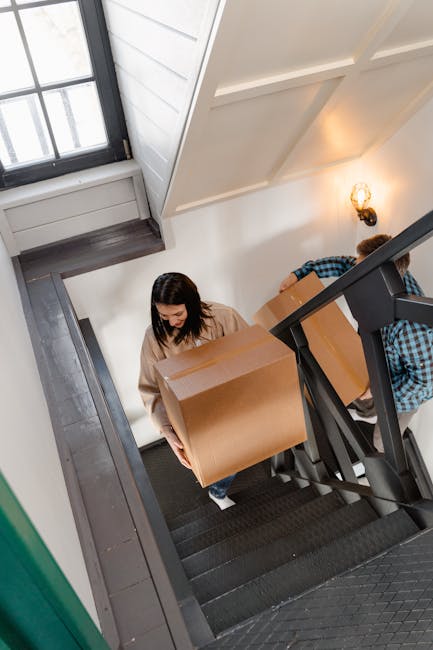
Avoid common mistakes with tight stairs in Kensington removals

Tight staircases can turn a straightforward move into a sweaty, awkward little puzzle. In Kensington, that puzzle shows up more often than people expect: narrow hallways, steep Victorian stairs, awkward landings, polished banisters, and corners that seem designed to test patience. If you are planning a move and want to avoid common mistakes with tight stairs in Kensington removals, the good news is that most problems are preventable with the right prep.
This guide walks through what usually goes wrong, why it matters, and how to plan a safer, smoother move. You will find practical steps, common pitfalls, a simple checklist, and a real-world example of how a careful approach can save time, money, and a fair bit of stress. Let's face it, nobody wants a wardrobe wedged halfway up the stairs at 8:15 on a Tuesday morning.
Why Avoid common mistakes with tight stairs in Kensington removals Matters
Tight stairs are not just an inconvenience. They shape the whole move. If a sofa cannot turn on the landing, or a mattress catches on a handrail, the schedule can unravel fast. In Kensington, many properties are older conversions, mansion blocks, and period homes where stair width, ceiling height, and turning space are limited. That means the usual "just carry it upstairs" approach often falls apart pretty quickly.
The real risk is not only damage to furniture. It is also damage to walls, plaster, bannisters, floors, and sometimes people. A rushed lift on narrow stairs can lead to scraped knuckles, pinched fingers, strained backs, and broken items. And once one item gets stuck, everything behind it slows down. You lose momentum. The room fills with noise, dust, and that slightly hopeless feeling nobody enjoys.
A well-planned move reduces all of that. It also helps you choose the right moving method, whether that is a full removals service, a smaller man and van option, or a more specialised service for bulky or fragile items. The goal is simple: make the staircase work for the move, not against it.
Expert summary: Tight stairs usually fail because of poor preparation, not bad luck. Measure early, reduce bulk where possible, protect the property, and decide in advance what should go up the stairs and what should not.
How Avoid common mistakes with tight stairs in Kensington removals Works
Handling a move with narrow stairs is basically a mix of measurement, judgement, and choreography. The practical part starts before moving day. You need to know what is going through the stairwell, in what order, and at what angle. That sounds obvious, but you would be surprised how many moves start with people "seeing if it fits" while already standing on the first landing. Not ideal.
First, assess the staircase itself. Look at the width of the narrowest point, the depth of each landing, and any awkward features such as low ceilings, light fittings, handrails, or uneven steps. Then assess the item. A sofa may be technically short enough, but if it is deep, bulky, and has rigid arms, the turning circle may still defeat it.
Next comes route planning. The team should decide whether each item will be carried upright, on its side, or partially rotated. That choice matters because what works for a boxy chest of drawers may be terrible for a glass table or piano. A careful crew will also decide whether anything needs to be dismantled first, which is where packing and boxes and dismantling prep can make a real difference.
Finally, the move needs protection. Stair rails, walls, corners, and floors should be covered where possible. Good preparation is not fancy. It is just sensible. In a tight stairwell, even a small bump can leave a mark you will stare at for weeks after the move.
Key Benefits and Practical Advantages
When stair access is handled properly, the move becomes more controlled and far less exhausting. That may sound modest, but it changes everything on the day.
- Less damage risk: You reduce the chance of scuffs, dents, chipped paint, cracked corners, and broken furniture.
- Safer handling: Clear planning lowers the chance of back strain, slips, and finger injuries.
- Faster progress: If the route has been thought through, items move without constant stopping and rethinking.
- Better use of labour: Fewer people standing around guessing, more people actually moving things safely.
- Lower stress: This is a big one. A calm move feels entirely different from a chaotic one.
There is also a commercial advantage. If you are comparing removal companies, you will usually find the better ones ask detailed access questions up front. That is a good sign. It means they are thinking about the job properly instead of just hoping the staircase will be kind to them. Spoiler: it rarely is.
For flats and upper-floor homes, the difference can be especially noticeable. Services such as flat removals are often shaped around access challenges, which is exactly what you want when the stairwell is tight and the clock is ticking.
Who This Is For and When It Makes Sense
This advice is useful for anyone moving out of a property with limited stair access, but it is especially relevant in older Kensington buildings and smaller converted flats. If your home has a narrow stair run, sharp turns, or a low overhead landing, you need a plan rather than optimism.
It makes sense if you are:
- moving from a period townhouse or upper-floor flat
- handling bulky furniture such as wardrobes, beds, or sofas
- moving fragile or valuable items that need careful positioning
- coordinating a family move with children, pets, and plenty of boxes underfoot
- arranging a workplace move where access time is limited, such as an office relocation
If you are moving on a tight schedule, the staircase becomes even more important. A same-day plan, for example, leaves less room for trial and error. In that situation, a small access mistake can ripple through the whole day. You may also want to consider same-day removals if timing is tight and the move cannot slip.
Students moving from a top-floor flat, or households placing items into storage between addresses, face similar issues. It is not glamorous, but it is real life. The stairs still have to be navigated, tea still spills, and the most awkward chair is always the last one down.
Step-by-Step Guidance
Here is a practical way to approach a tight-stair move without overcomplicating it.
- Measure the staircase and the furniture. Check width, height, landing depth, and any turning points. Measure the widest point of each item too, not just its overall length.
- Identify problem items early. Anything large, heavy, fragile, or oddly shaped should be flagged straight away. That includes mirrors, bed frames, desks, and awkward armchairs.
- Decide what should be dismantled. Shelving, bed frames, table legs, and some wardrobes are often easier to move in parts.
- Prepare protective materials. Use covers, blankets, tape, and floor protection where needed. Keep everything close at hand so nobody has to run back and forth mid-lift.
- Clear the route completely. Move loose rugs, shoes, ornaments, and anything else that could snag a foot or slow the team down.
- Assign roles. One person leads the item, another guides from behind, and a third watches corners and clearance. Too many voices can cause confusion. Too few, and everyone is guessing.
- Move the largest items first if access allows. That way you are not fatigued before the hardest lift. It is a simple trick, but a useful one.
- Check each turn slowly. Do not force a piece around a landing if it is clearly catching. Stop, adjust, breathe. Then try again.
If you are arranging a broader household move, it may help to combine stair planning with home moves support, especially where there are multiple rooms and several bulky items. The more the sequence is thought through, the calmer the day tends to be. Usually, anyway.
Expert Tips for Better Results
A few small details make a surprisingly big difference on tight stairs.
1. Empty items before moving them. A chest of drawers with heavy contents is far harder to control than an empty one. You also reduce unnecessary weight, which matters more than people think.
2. Use the right carry method. Some items need to be held vertically, others horizontally, and some rotated at an angle. The mistake is assuming there is one "correct" position for everything. There is not.
3. Protect corners before the lift starts. If you wait until the first scratch appears, you have already lost the game a bit. Honestly, stair corners have a talent for finding furniture edges.
4. Don't overload a box. Tight stairs punish heavy boxes. A medium box that is too dense is much harder to carry safely than a larger one filled sensibly.
5. Keep communication short and clear. Phrases like "stop", "lift", "turn", and "down slowly" are much better than long explanations mid-carry.
6. Build in a little extra time. In Kensington, parking, access, and building rules can all affect the move. Even a careful staircase plan can be delayed by one awkward delivery truck or a busy entrance.
For fragile or valuable pieces, such as a family piano, specialist handling may be the wiser choice. That is where piano removals can be far more appropriate than improvising with a general carry. Different object, different risk, different solution.
Common Mistakes to Avoid
This is the section that saves people money and embarrassment.
- Not measuring the narrowest point. People often measure the staircase overall and miss the tightest corner or turn.
- Forcing large furniture through a route it clearly does not suit. If something keeps snagging, stop and reassess. Forcing it rarely ends well.
- Leaving packed drawers full of heavy items. It adds weight and makes the centre of gravity awkward.
- Ignoring landing space. A sofa may fit on the stair, but still fail at the landing because there is nowhere to pivot.
- Failing to protect walls and banisters. In a tight stairwell, a single careless scrape can be hard to hide.
- Using boxes that are too large or too heavy. That old trick of "fewer boxes, bigger boxes" is not always wise on stairs.
- Not briefing everyone involved. If one helper is turning left while another is pushing right, things get messy quickly.
- Assuming the same plan works for every item. It does not. A mattress, mirror, and filing cabinet each need a different approach.
Another quiet mistake is forgetting the downstairs and upstairs bottlenecks. A narrow staircase is only one part of the picture. Door width, hallway space, and street access all matter too. The move is the whole route, not just one staircase segment. That distinction saves a lot of trouble.
Tools, Resources and Recommendations
You do not need fancy equipment, but a few basics help a lot.
- Measuring tape: Essential for checking both furniture and stair dimensions.
- Furniture blankets and covers: Useful for protecting paintwork and softening knocks.
- Strong tape and straps: Helpful for keeping parts secure once dismantled.
- Gloves with grip: Better control, especially on smooth or polished surfaces.
- Floor protection: Helpful for protecting wooden floors, tiles, and hallway finishes.
- Box labels: Sounds basic, but clear labels prevent unnecessary double handling.
If you need a wider packing solution, the service page for packing and unpacking services is relevant because the way you pack can either help or hinder the staircase move. Good packing keeps weight sensible and reduces the chance of awkward reshuffling on the landing.
For smaller moves, a flexible vehicle option may also be enough. A removal van or a man with a van setup can suit compact loads, especially where access is difficult and the move needs a lighter, more agile approach. For larger or mixed loads, a moving truck may be more appropriate, provided the access plan is still sensible.
Law, Compliance, Standards, or Best Practice
For most household moves, the main concern is not a complex legal rulebook, but safe working practice. In the UK, moving teams are generally expected to work in a way that reduces injury risk and protects property. That means sensible lifting, clear communication, and careful handling of obstacles such as stairs, landings, and tight corners.
If you are hiring a professional mover, it is reasonable to ask about their safety approach, insurance, and how they handle access challenges. The site's health and safety policy and insurance and safety information are the kind of pages that help build trust because they show the business takes risk management seriously. That is not just paperwork. It is reassurance.
For commercial moves, access planning matters even more. Office equipment, filing systems, monitors, and furniture all need organised handling. If your move involves a workplace or studio rather than a home, office removals or commercial moves may provide the right framework for a stair-heavy route.
Best practice also includes honest communication. If an item is unlikely to fit, say so early. If a building has awkward access, disclose it in advance. No drama, just clarity. That is how you avoid wasted time and reduce the chance of disputes later.
Options, Methods, or Comparison Table
Different moving methods suit different staircase situations. Here is a simple comparison.
| Approach | Best for | Strengths | Watch-outs |
|---|---|---|---|
| General removals service | Full house or flat moves | More hands, better coordination, suitable for mixed items | Needs accurate access details and enough time |
| Man and van | Smaller loads, lighter furniture, short-distance moves | Flexible, often quicker to arrange, good for compact jobs | May not suit very bulky or fragile items |
| Specialist handling | Pianos, large mirrors, awkward antiques | More careful positioning and item-specific know-how | Usually best when booked in advance |
| Storage-first move | Staged relocations or delayed move-ins | Reduces pressure on move day | Extra handling and planning needed |
If you are not sure which route fits your situation, a quick discussion before moving day is often enough to narrow it down. In many cases, the right answer is a mixed approach: some items dismantled, some protected, some stored, and the most awkward one handled separately.
For temporary overflow or delayed access, storage can be a sensible option. It takes pressure off the staircase on the day and helps you move at a more manageable pace.
Case Study or Real-World Example
Imagine a third-floor Kensington flat with a narrow staircase, a sharp bend on the first landing, and a dining table that looks innocent until you try to turn it. The couple moving out had already packed most of their belongings, but the table, a tall shelving unit, and a sofa were the problem items.
Instead of arriving and hoping for the best, the move was split into stages. The table legs were removed, the shelving unit was emptied and dismantled, and the sofa was checked against the stair width before the lift began. One helper stayed at the landing to guide the angle. Another protected the wall at the bend. Nobody rushed. Nobody tried to "just squeeze it through".
The result was plain but satisfying: no damage, no stuck furniture, and no last-minute panic. The move still took effort, of course. It always does. But the difference between a difficult move and a chaotic one was simply preparation.
That is the pattern you see again and again. Tight stairs are rarely impossible. They are just unforgiving. Once you treat them as a design constraint instead of an afterthought, everything gets easier.
Practical Checklist
Use this checklist before move day.
- Measure the staircase width, landing space, and any tight bends
- Measure the largest pieces of furniture and appliances
- Decide which items need dismantling
- Remove contents from drawers, shelves, and cupboards
- Pack heavy items into smaller, manageable boxes
- Protect floors, walls, corners, and bannisters
- Clear hallways, stairwells, and entrances of clutter
- Label fragile and awkward items clearly
- Confirm parking, access, and timing in advance
- Brief everyone on the moving order and lifting plan
- Keep water, gloves, tape, and blankets close by
- Build in extra time for stairs that look tighter than expected
One-line reminder: if it looks tight on paper, it will feel tighter in real life.
If you are still weighing up costs, timing, or the right move type, take a look at pricing and quotes before you book. And if you want to compare the wider range of help available, removal services gives a good sense of how different support options fit different kinds of access challenges.
Get a free quote today and see how much you can save.
Conclusion
Tight stairs in Kensington are not a deal-breaker. They are a planning challenge. Once you know where the common mistakes happen, the move becomes much more manageable: measure properly, protect the route, reduce weight, choose the right service, and never assume the staircase will be "fine on the day".
That last assumption causes more trouble than people admit. The better approach is calm, practical, and slightly cautious - which is probably how you want a move to feel anyway. If you prepare well, the stairs stop being the enemy and become just another part of the route.
And when the last box is finally down, the hallway is clear, and the kettle is on, the whole thing feels a little easier to remember than it felt to do.
Frequently Asked Questions
How do I know if my furniture will fit on tight stairs?
Measure the narrowest point of the staircase, the landing space, and the widest part of the furniture. If the item needs to turn sharply, the landing matters just as much as the staircase width. When in doubt, treat large or rigid furniture as a special case.
What are the most common mistakes with narrow staircases during removals?
The biggest mistakes are poor measuring, overpacked boxes, failing to dismantle large items, and not protecting walls or banisters. Rushing is another one. Tight stairs punish haste. They always have a way of doing that.
Should I dismantle furniture before moving it downstairs?
Often, yes. Bed frames, shelving, table legs, and some wardrobes are much easier to move in pieces. Dismantling reduces weight and makes turning corners easier, which is especially helpful on older Kensington staircases.
Is a man and van service enough for a move with tight stairs?
It can be, if the load is fairly small and the items are manageable. For heavier, fragile, or high-volume moves, a fuller removals setup may be better. The key question is not just size, but how awkward the access is.
What should I do if a sofa gets stuck on the stairs?
Stop immediately and reassess the angle. Do not force it. Sometimes the best fix is to rotate the item, remove legs, or change the carry position. Forcing a stuck sofa tends to create damage and, frankly, a bad mood.
How can I protect walls and banisters during a staircase move?
Use blankets, covers, and floor protection where possible, and assign someone to watch the tightest points. Protective padding helps a lot, but good communication matters too. A careful guide at each turn can prevent the small knocks that cause visible marks.
Are there special risks with moving boxes down narrow stairs?
Yes. Boxes that are too heavy can throw off balance, and oversized boxes are harder to control around turns. Use medium-sized boxes for heavy items and keep fragile boxes clearly marked so they are handled more carefully.
When should I book specialist help for a stair-heavy move?
If you have a piano, very large furniture, antiques, or a stairwell with sharp turns and limited landing space, specialist help is sensible. The more valuable or awkward the item, the more likely it is worth handling it separately rather than improvising.
What if my building has awkward access and no lift?
That is exactly when planning matters most. Share the access details early, measure everything, and decide whether dismantling or storage is needed. If the building is a flat or upper-floor property, services like flat removals may be a better fit than a generic approach.
How do I make moving day less stressful with tight stairs?
Keep the route clear, pack sensibly, and avoid leaving access decisions until the last minute. A short checklist, a calm pace, and clear roles for everyone involved make a surprising difference. Little things add up.
Do I need storage if the stairs are too difficult on move day?
Not always, but storage can help if you need to split the move into stages or reduce pressure on the day. It is also useful when your new place is not ready yet. In those cases, temporary storage can buy you space and time.
What should I ask a removals team before booking for tight stairs?
Ask how they handle access checks, whether they need measurements in advance, what protection they use for walls and floors, and whether they have experience with narrow stairwells. A good team will answer clearly and won't treat those questions as a nuisance.
Can office or commercial moves involve the same stair problems?
Absolutely. Office furniture, filing cabinets, IT equipment, and partitions can all create access challenges. If your move is business-related, it is worth looking at office relocation services or commercial moves so the plan fits the building as well as the schedule.
What is the simplest way to avoid damage on tight stairs?
Measure early, dismantle where sensible, protect the route, and move slowly. That is the simple version, and it really is the one that works most often. No magic, just good prep and a steady hand.